

Products
- Products
- Water Quality Sensors
- CP4.0MA2

Water Quality Sensors
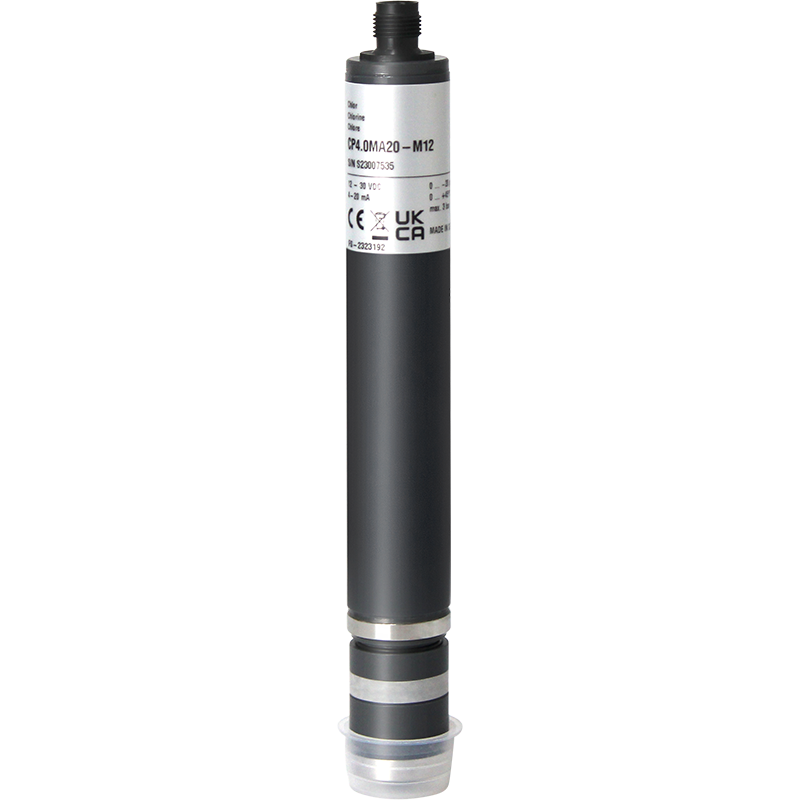
CP4.0MA2
Residual Chlorine Sensor
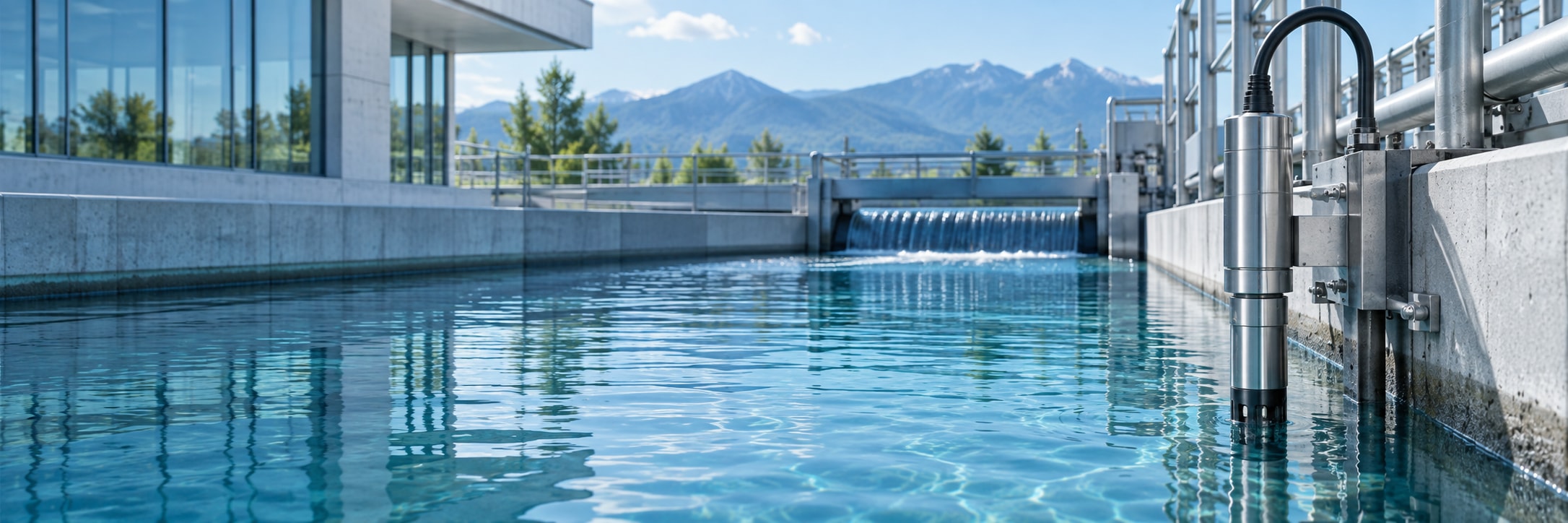
A residual chlorine sensor that measures total residual chlorine.
Product Overview
CP4.0MA2is a sensor that measures total residual chlorine using a membrane-covered, three-electrode electrochemical method.
Suitable for monitoring disinfectants in water treatment facilities.
Suitable for swimming pool and drinking water quality management, with flow-through installation.
Specifications
| Measured Parameters | Total residual chlorine |
|---|---|
| Measurement Principle | Membrane-covered three-electrode electrochemical method |
| Measurement Range | 0~20 mg/L |
| Response Time | T90 approx. 2 minutes |
| Resolution | 0.001 ppm or 0.01 ppm |
| Accuracy | 2 mg/L range: <2% at 0.4 mg/L and <2% at 1.6 mg/L / 20 mg/L range: <1% at 4 mg/L and <3% at 16 mg/L |
| Operating Temperature | Sample water: 0–45 °C / Ambient: 0–55 °C |
| Storage Temperature | Sensor: +5–+40 °C / Electrolyte: +5–+35 °C / Membrane cap: +5–+40 °C |
| Operating Pressure | Standard 0.5 bar / Up to 3 bar with retaining ring |
| Power Requirements | DC ±5–±15 V / DC 9–30 V / DC 12–30 V, depending on version |
| Power Consumption | Approx. 10 mA or 20–56 mA (depending on version) |
| Electrical Isolation | Digital version: galvanic isolation / Analog version: no galvanic isolation |
| Communication Protocol | Modbus RTU(RS-485) |
| Temperature Compensation | Automatic temperature compensation using the built-in temperature sensor |
| Calibration Method | Calibrate by measuring the actual residual chlorine concentration using the DPD-4 method (DPD-1 + DPD-3) and comparing it with the sensor signal |
| Calibration & Maintenance | Check the measurement signal at least weekly / Replace the membrane cap and electrolyte annually |
| Installation Type | Flow-through (vertical installation) |
| Dimensions | Approx. 25 mm diameter / Approx. 175–220 mm length (depending on version) |
| Materials | PVC-U / PEEK / stainless steel / microporous hydrophilic membrane |
| Cable | 5-pin M12 / 2-pole terminal connection (depending on model) |
A better approach to water quality management starts with Water Eyes.
Prompt, accurate responses to product inquiries and technical questions.